 Eric Boggs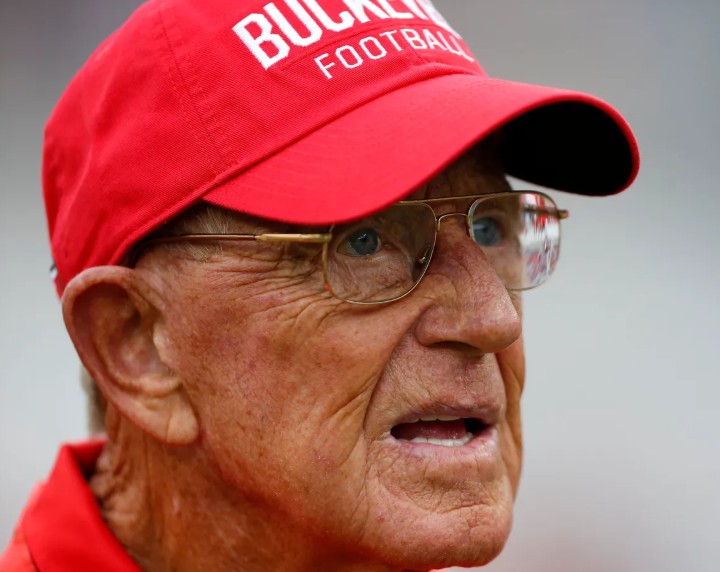
News that Lou Holtz has entered hospice care at the age of 89 has prompted a wave of reflection across the college football world, especially in the Midwest where his legacy is deeply woven into the sport’s history. Best known for leading Notre Dame to its last national championship in 1988, Holtz’s impact stretches far beyond South Bend. For Ohio State fans, his story carries a unique resonance, rooted in Ohio, shaped by Woody Hayes, and influential in ways that still echo through the program today.
Holtz grew up in East Liverpool, Ohio, played linebacker at Kent State, and began his coaching journey in the Big Ten with Iowa before rising to national prominence. His career took him from William & Mary to NC State, Arkansas, Minnesota, and eventually Notre Dame, where he built a powerhouse that went 12-0 in 1988 and captured a national title. He finished his coaching career with 249 wins, a College Football Hall of Fame induction, and a reputation as one of the sport’s most recognizable voices, later becoming a mainstay as a broadcaster for CBS and ESPN. Yet for Buckeye fans, one of the most meaningful chapters of his career came early, when Holtz served as linebackers coach on Woody Hayes’ 1968 Ohio State national championship team, a season that ended with a Rose Bowl win over USC and O.J. Simpson.

Holtz often credited Hayes as one of the most important influences of his life, once saying that the legendary Ohio State coach shaped him more than anyone other than his wife. That single season in Columbus left a lasting imprint, reinforcing Holtz’s belief that coaching was about significance, not just success. That philosophy carried through the rest of his career and into the next generation, most notably through Urban Meyer, who worked under Holtz at Notre Dame and has often spoken about the lessons he learned from him. Ideas like never peaking too early and focusing on daily discipline became cornerstones of Meyer’s own championship runs at Florida and Ohio State, tracing a direct line from Hayes to Holtz to Meyer.

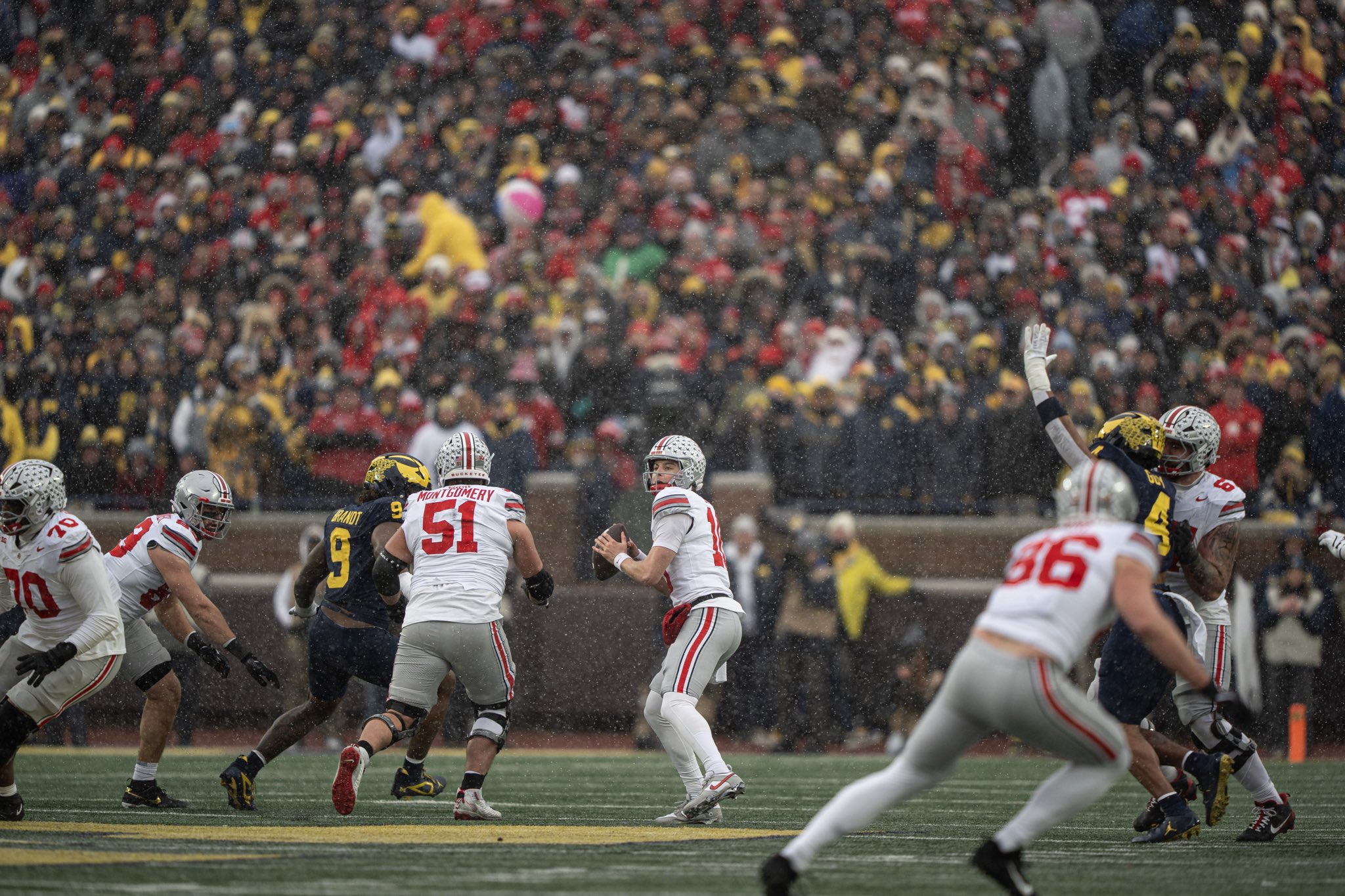
Even in his later years, Holtz remained part of the Ohio State conversation. His pointed comments about the Buckeyes’ toughness during the Ryan Day era sparked frustration, debate, and eventually a fiery on-field response from Day himself. But from an Ohio perspective, those words can also be seen as something more familiar: a challenge, a push, a spark meant to demand greatness, much like Hayes once did to Holtz. It felt less like criticism and more like the voice of an old coach who still cared deeply about the standard Ohio State represents.

As Holtz now reaches the final chapter of a remarkable life, the college football world is left to reflect on a career defined by wins, influence, and significance. From Notre Dame’s last national title to Ohio State’s 1968 championship, from shaping Urban Meyer to challenging Ryan Day, his fingerprints are all over the sport. For Buckeye fans, it is fitting to tip a cap to a man who, despite wearing green and gold for his greatest triumphs, always carried a piece of Ohio with him. Lou Holtz’s legacy will endure, not just in trophies and records, but in the coaches, players, and programs he helped shape for generations.