 Eric Boggs
At a high-profile college sports summit hosted by Donald Trump at Capitol Hill, some of the most recognizable figures in athletics gathered to discuss the rapidly changing landscape of college athletics. Among those in attendance were former Ohio State head coach Urban Meyer, legendary coach Nick Saban, golf icon Tiger Woods, and Adam Silver, all meeting alongside lawmakers including President Donald Trump to explore potential legislative solutions for college sports.
The discussion focused heavily on the chaotic environment created by the modern NIL era and the uncertain future of regulation in college athletics. While the proposed SCORE Act has been floated in Congress as a potential framework to regulate name, image and likeness compensation, it has yet to gain traction. Trump suggested the slow progress in Washington may force executive action, announcing plans to sign another executive order aimed at stabilizing the system.
Trump said the upcoming order would be broader than his previous attempt to address revenue sharing in college athletics and hinted at restoring some structure that existed before NIL became widespread. According to the president, the goal is a system built on “common sense” that allows both universities and athletes to survive financially. At the same time, he acknowledged that any sweeping executive order on college sports would likely face immediate legal challenges.
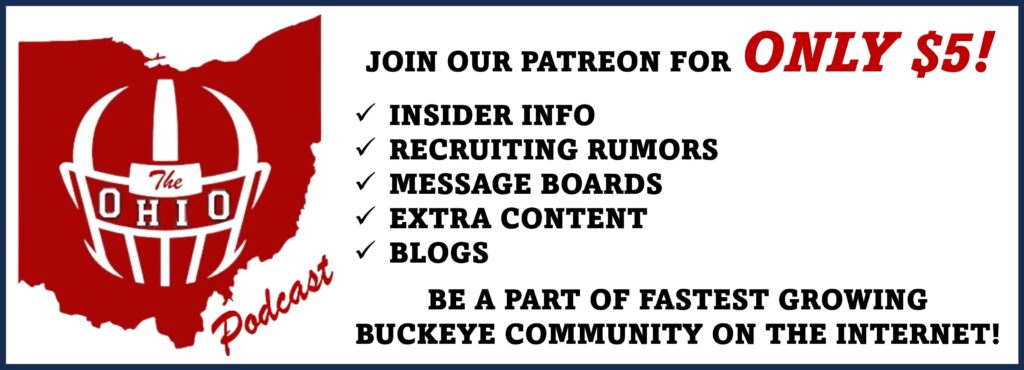
One of the most outspoken voices during the summit was Meyer, who used the opportunity to deliver a blunt critique of the NIL collective system that has become a major force in modern recruiting.
Meyer explained to Trump and the assembled leaders that collectives—organizations funded largely by donors that distribute money to players—have drifted far from the original intent of NIL. In his view, they function as a pay-for-play system disguised as endorsement opportunities.
“Get rid of the collectives though. That’s cheating,” Meyer said during the roundtable discussion. “Donors put money in a pot. It’s distributed to players through the coach and the general manager according to your talent level. That’s not allowed. That’s called pay for play.”
Meyer emphasized that NIL was originally designed to allow athletes to benefit from legitimate marketing opportunities tied to their personal brand. In theory, that meant a player could sign endorsement deals or promote businesses, much like professional athletes. Instead, he argued that the system has been distorted into something completely different.

“Nil in its purest form is America. It’s called capitalism,” Meyer explained. “If you can make money on your name, you should have a right to do that. If a car dealership wants to work with a football player, a gymnast, a swimmer, do it. That’s what NIL should be. That’s not what it is.”
According to Meyer, the problem arises when universities, donors, and collective organizations effectively coordinate payments to recruits or roster players. In some cases, athletes reportedly earn massive sums for minimal promotional activity, a reality Meyer believes undermines the credibility of the entire system.
He cited examples of players being paid millions while posting only a few social media promotions, arguing that those deals are clearly not reflective of genuine market value. “Players getting paid millions of dollars… posting on Instagram twice and getting paid 1.5 million dollars,” Meyer said. “That’s not name, image and likeness.”
From Meyer’s perspective, eliminating collectives would immediately improve the structure of college sports. He believes legitimate NIL opportunities should remain available through the open market, but universities and donor groups should not be able to coordinate payments behind the scenes.
“If a business owner wants to hire Jeremiah Smith and pay him a certain amount of money, he’s certainly allowed to do that,” Meyer said, referencing the star wide receiver for the Ohio State Buckeyes. “That’s called capitalism. But the universities cannot arrange that and set that up.”
Meyer also stressed that schools should focus on their traditional responsibilities—education, compliance, and ensuring fairness across programs, including Title IX protections for women’s sports. In his view, once institutions step away from managing athlete marketing deals, the marketplace would regulate NIL naturally.
“If the collective goes away,” Meyer concluded, “college sports gets better immediately.”
The summit ultimately underscored just how divided and uncertain the future of college athletics remains. But Meyer’s remarks captured the frustration shared by many longtime figures in the sport who believe the current NIL environment has drifted far beyond its original intent. For Ohio State fans, hearing one of the program’s most successful coaches speak so candidly about the issue added a powerful voice to a debate that could reshape the future of college football.