 Eric Boggs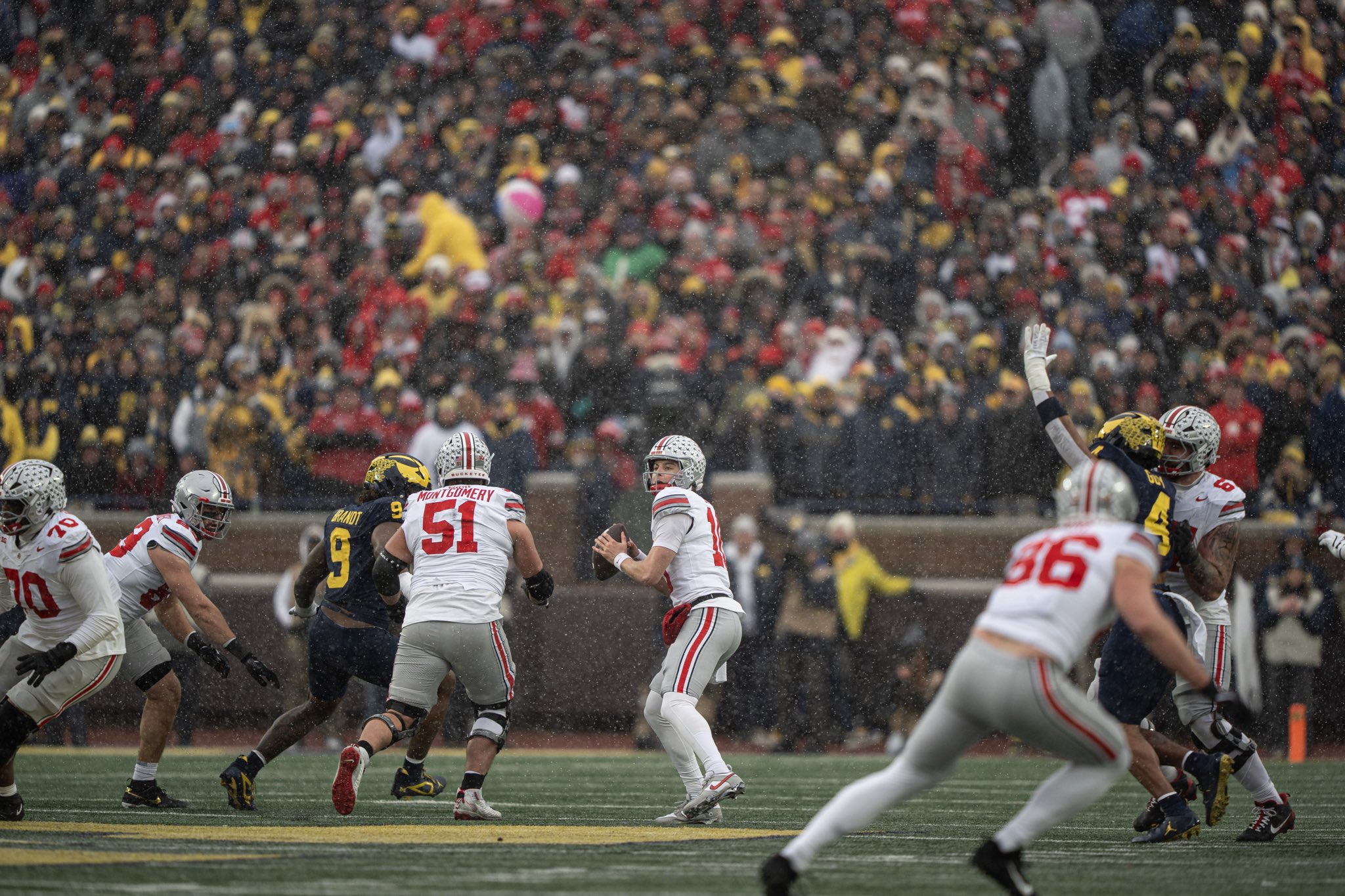
The start of spring practice always brings renewed optimism around the Ohio State football program, and after two sessions on the practice field, there is already a clear focus for the Buckeyes heading into the 2026 season. While several returning starters are looking to build on last year’s foundation, much of the attention centers on quarterback Julian Sayin and how he plans to elevate his game after an outstanding yet unfinished 2025 campaign.
From an Ohio State perspective, Sayin’s first season as the Buckeyes’ starting quarterback was remarkable. Under head coach Ryan Day, Sayin followed the path of past Buckeye standouts like Justin Fields and C. J. Stroud by becoming a Heisman Trophy finalist in his first year leading the offense. He also broke the college football regular-season completion percentage record while guiding Ohio State to one of the most efficient passing attacks in the nation.
Yet despite the accolades, Sayin’s offseason motivation was fueled by the team’s disappointing finish. The Buckeyes dropped a narrow loss to the Indiana Hoosiers in the Big Ten Championship Game before falling to the Miami Hurricanes in the College Football Playoff quarterfinal. Those defeats left Sayin replaying moments he wishes he could have back.
Rather than dwell on the highlights from his record-setting season, the redshirt sophomore has been focused on the few plays that might have changed the outcome of those games. In the Big Ten title game loss to Indiana, Sayin completed 72.4 percent of his passes but produced just 258 yards with one touchdown and an interception, while a failed fourth-and-goal quarterback sneak halted a potential go-ahead drive. Against Miami in the Playoff, he endured his toughest outing of the season, finishing with a 62.9 percent completion rate and two interceptions while being sacked multiple times.

One of the most discussed aspects of those struggles was Sayin’s reluctance to use his legs when plays broke down. Across the season he finished with negative rushing yardage due largely to sacks and rarely took advantage of open running lanes, something that drew criticism from fans and became a clear point of emphasis from the coaching staff.
Day has been straightforward about what could unlock another level in Sayin’s game. The Buckeye head coach believes the quarterback’s ability to make timely plays with his legs can become a true difference-maker in the offense. That doesn’t mean Ohio State expects him to transform into a full dual-threat quarterback, but simply using mobility when opportunities arise could help extend drives and relieve pressure on the offensive line.
Sayin agrees with that assessment and has embraced the challenge throughout the offseason. He spent months working with strength coach Mickey Marotti to add weight and strengthen his frame so he can absorb contact when scrambling. At the same time, he has been refining his pocket movement and footwork to better recognize when to escape pressure.
For Sayin, the goal is simple: elite quarterbacks must thrive even when the play breaks down. Recognizing when the pocket is collapsing and trusting his instincts to take off and run is an area he believes can directly help the Buckeye offense in key moments, especially on critical downs.

That improvement also ties into another concept he continues to develop — his internal clock in the pocket. Knowing when to deliver the ball, when to move within the pocket, and when to abandon the play entirely is something Sayin feels more comfortable with as he gains experience.
While mobility is a major focus, it is far from the only area of growth this spring. Sayin is also embracing a larger leadership role within the offense. Early in the Buckeyes’ second practice, after Day addressed the team, Sayin stepped forward to challenge his teammates with a fiery message emphasizing toughness and urgency.
The leadership shift comes naturally as he enters his second season as the starting quarterback. With a new offensive system being implemented by coordinator Arthur Smith, Sayin’s responsibilities will expand even further. He will be tasked with making checks at the line of scrimmage, communicating adjustments, and ensuring younger players understand the timing and details of the offense.

That process has already required him to become more assertive with receivers and teammates during practice. As the quarterback delivering the football, Sayin understands he must dictate routes, depth, and timing so the offense can operate efficiently.
For Ohio State fans, the encouraging takeaway from the first days of spring practice is that Sayin isn’t satisfied with what he accomplished in 2025. Despite a season that placed him among the best quarterbacks in college football, he is approaching this offseason with the mindset that the job is unfinished.
The Buckeyes already know what Sayin can do when the offense is operating smoothly. If his offseason work translates into more mobility, quicker decisions under pressure, and stronger leadership, Ohio State’s offense could become even more dangerous in the year ahead — and the program may find itself back in the championship chase where Buckeye fans believe it belongs.