 Eric Boggs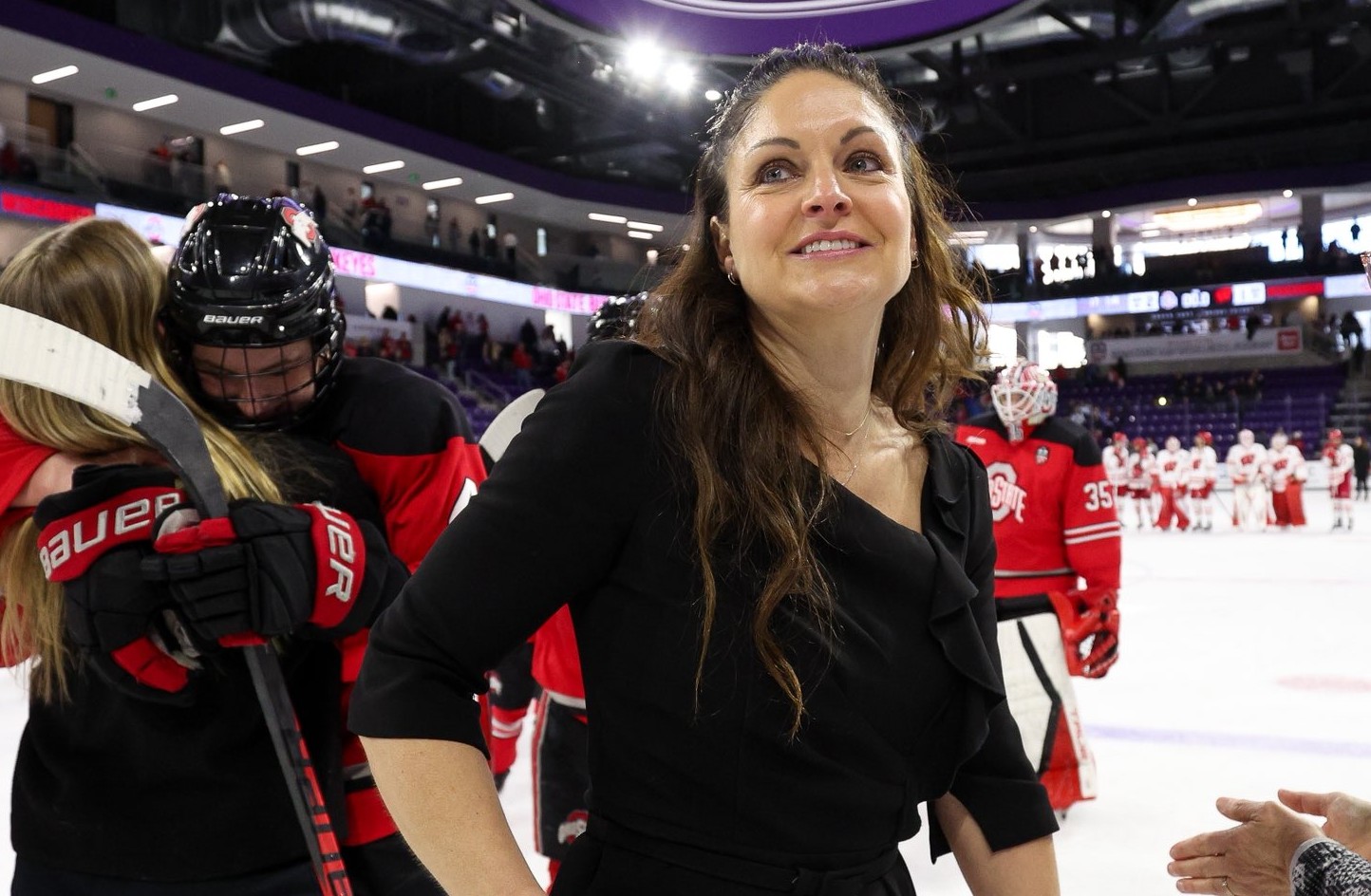
Ohio State ensured stability at the top of its women’s hockey program at the most critical time of the season, announcing that head coach Nadine Muzerall has agreed to a new five-year contract. The move, made by athletic director Ross Bjork, not only rewards one of the most successful coaches in the sport but also shuts down any possibility of her leaving Columbus just as the Buckeyes prepare for another national title push.
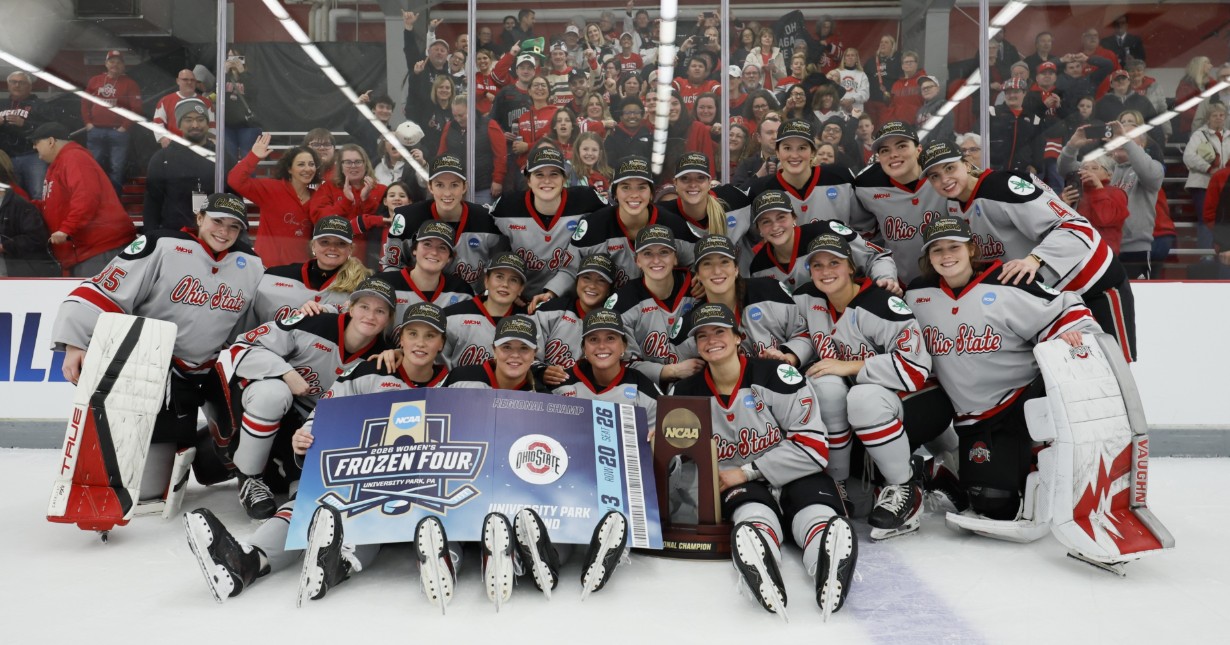
From an Ohio State perspective, the extension feels both necessary and symbolic. Muzerall has built the Buckeyes into a powerhouse since arriving in 2016, turning a program that once fought for relevance into one that now sets the standard. Under her leadership, Ohio State has captured two national championships, appeared in four title games, and reached seven Frozen Fours. This season’s run marks a sixth consecutive trip, further cementing the program’s place among the elite. The Buckeyes’ recent WCHA Final Faceoff title and dominant 6-1 win over Yale to punch their latest Frozen Four ticket only reinforce that this is not a peak—it’s a sustained era of excellence.
What makes this extension even more significant is the context surrounding it. The University of Minnesota, one of the sport’s traditional blue bloods, recently parted ways with longtime head coach Brad Frost. That immediately put Muzerall in the spotlight as a natural—and perhaps obvious—candidate to return to her alma mater. Her ties to Minnesota run deep. As a player from 1997 to 2001, Muzerall was one of the foundational stars of the Golden Gophers program, finishing her career with a then-record 139 goals while earning All-American honors and contending for the Patty Kazmaier Award. She later returned to Minnesota as an assistant coach, helping guide the program to four national championships between 2012 and 2016.
That history made her incredibly appealing to Minnesota leadership, including athletic director Mark Coyle. Muzerall represents both tradition and proven success, a rare combination for a program looking to reestablish itself at the top of the sport. But Ohio State’s proactive move to lock her in removes her from the equation entirely, forcing Minnesota to explore other options while the Buckeyes maintain continuity at the height of their dominance.

For Ohio State fans, that continuity is everything. Muzerall has not only recruited elite talent but has built a culture that emphasizes toughness, development, and fit—something she has consistently stressed when describing the program’s rise. The results are evident in a roster that blends star power with depth and resilience, a formula that has kept the Buckeyes in championship contention year after year.
Now, the focus shifts back to the ice, where Ohio State enters the Frozen Four as the tournament’s top seed. The Buckeyes will face Northeastern in the national semifinals in University Park, Pennsylvania, with a chance to advance to yet another championship game. Awaiting the winner on the other side could be familiar territory, as Wisconsin—Ohio State’s recent rival in multiple title games—looms as a potential opponent alongside Penn State.

The matchup with Northeastern presents an intriguing challenge. While the Buckeyes bring experience and firepower, the Huskies arrive with momentum after a statement win over Minnesota. Still, Ohio State holds the edge in both pedigree and depth, led by standout performances across the roster, from dynamic forwards to steady goaltending.
Beyond that game, the broader narrative of the weekend reflects the evolving landscape of women’s college hockey. While the WCHA continues to dominate historically, programs outside the conference are beginning to push back, adding intrigue to a tournament that once felt predictable. Yet, Ohio State remains firmly at the center of it all—a program that has helped define this era and shows no signs of slowing down.
With Muzerall now secured for the long term, the Buckeyes are not just chasing another championship this weekend—they are reinforcing a dynasty.