 Eric Boggs
When Kyle Whittingham accepted the head coaching job at Michigan, he stepped into one of the most prestigious roles in college football—but also one of the most complicated. His own words in a recent interview made it clear that while the opportunity was irresistible, the reality of what awaits in Ann Arbor is layered with challenges that go far beyond wins and losses.
Whittingham acknowledged the magnitude of leaving Utah, where he spent more than three decades building stability and identity. That foundation is precisely why Michigan pursued him. But unlike the program he left behind, Michigan is not currently defined by continuity—it is defined by turbulence. From NCAA scrutiny to staff turnover and off-field controversy, the program he inherits is still dealing with the fallout of a fractured culture.

That reality has been a central point of discussion, particularly among Ohio State Buckeyes observers. Commentary surrounding the hire consistently returns to one core idea: before Michigan can realistically focus on beating Ohio State, it has to rebuild its internal foundation. Whittingham himself hinted at that, emphasizing the importance of culture, character, and alignment within the locker room. While he praised Michigan’s current roster for its attitude and work ethic, the broader perception remains that repairing the program’s identity is priority number one.
Layered on top of that is the modern challenge of roster management. Whittingham openly discussed how the transfer portal and NIL landscape have fundamentally changed team building. With rosters turning over at nearly a 50 percent rate each year, establishing culture becomes significantly harder. At Utah, he thrived on long-term development and continuity. At Michigan, he’ll need to recreate that stability in an environment designed for constant change.

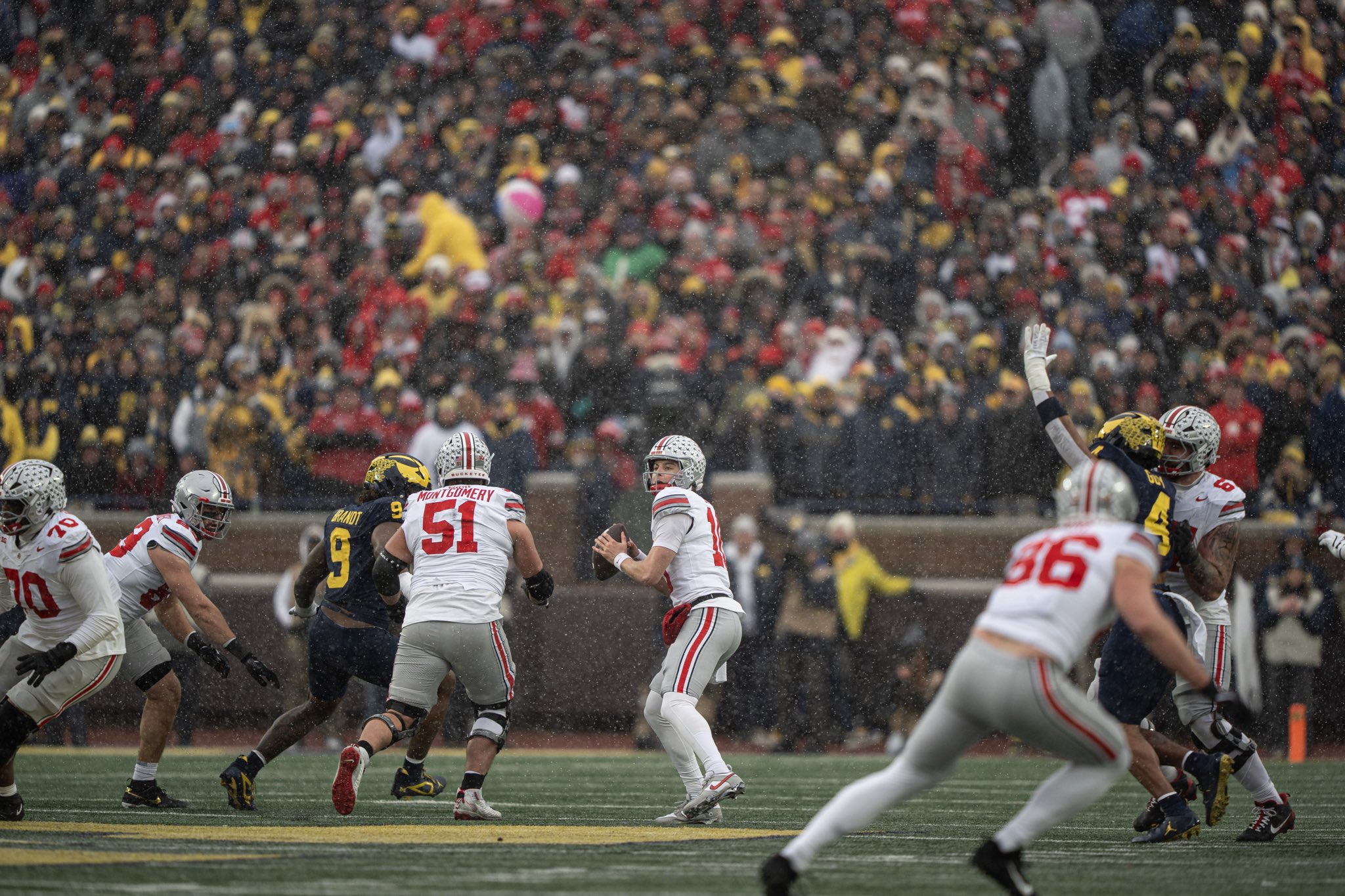
Then there is the rivalry—something Whittingham addressed with a measured tone that drew skepticism from Buckeye circles. Having coached in the BYU-Utah “Holy War,” he understands rivalry intensity, but even he admitted that what awaits him in “The Game” is on another level. From an Ohio State perspective, that acknowledgment matters, because this rivalry is not something a coach can fully grasp until he lives it. It’s not just another matchup; it defines seasons, legacies, and, at times, careers.
That learning curve is significant. Even accomplished coaches have needed time to truly understand what it means to face Ohio State. For Whittingham, that adjustment comes while juggling more pressing concerns—reestablishing trust in the program, stabilizing leadership, and developing consistency on the field.

There are also on-field questions that can’t be ignored. Michigan has talent, particularly at the skill positions, but concerns about depth and line play remain. Quarterback development looms especially large, as Whittingham’s track record at producing NFL-level passers has been questioned. If Michigan is going to contend at a high level, progress at that position will be essential.
Ultimately, Whittingham brings credibility, discipline, and experience—qualities Michigan desperately needs. But this is not the same situation he thrived in at Utah. He is no longer building something from the ground up in relative stability; he is walking into a program that must first rediscover itself.
From an Ohio State vantage point, that reality is what defines his first year. The threat level from Michigan may rise under his leadership, but the immediate task isn’t flipping the rivalry—it’s fixing what’s broken. Until that happens, the road back to national relevance—and to truly challenging the Buckeyes—remains a steep climb.