 Eric Boggs
The modern college football landscape has turned quarterback recruiting into a high-stakes gamble, and nowhere is that tension more visible than at Ohio State. In an era when transferring has become standard operating procedure for quarterbacks, the traditional model of signing an elite high school prospect and patiently developing him is constantly being tested. The data makes that clear: more than 70 percent of top quarterback recruits from the 2017–2020 classes transferred at least once, and even those who started early still often moved on. The position has become a revolving door driven by eligibility extensions, the one-time transfer rule, and NIL incentives that encourage players to keep searching for the perfect fit. Against that backdrop, Ryan Day’s continued commitment to recruiting and developing quarterbacks in-house stands out as both a belief in long-term stability and a calculated risk.

From a Buckeye perspective, it’s hard to argue with Day’s track record as a quarterback developer. Ohio State has produced first-round picks, Heisman finalists, and national championship-caliber play from the position. But the portal era has changed the math. Quarterbacks who don’t see the field early almost always leave, and even those who do play often still transfer in search of better situations or bigger opportunities. Investing massive resources into high school quarterbacks is no longer a guarantee of return, and nationally we’ve seen countless examples of five-star prospects who never finished their careers where they started. The position is now less about loyalty and more about timing, opportunity, and experience.
That last factor — experience — has quietly become one of the strongest predictors of championship success. Since the College Football Playoff began, and especially in the transfer portal era, national title teams have overwhelmingly been led by older quarterbacks. Fifth- and sixth-year players like Joe Burrow, Stetson Bennett, Mac Jones, Will Howard, and Fernando Mendoza have proven that maturity and game reps matter when the stakes are highest. Ohio State saw that firsthand in 2024, when Howard’s 34 games of prior experience helped guide a veteran Buckeye roster through a brutal CFP run to a national title. The following season, Indiana followed the same blueprint, handpicking a seasoned transfer quarterback and riding that experience all the way to a championship and a Heisman Trophy.
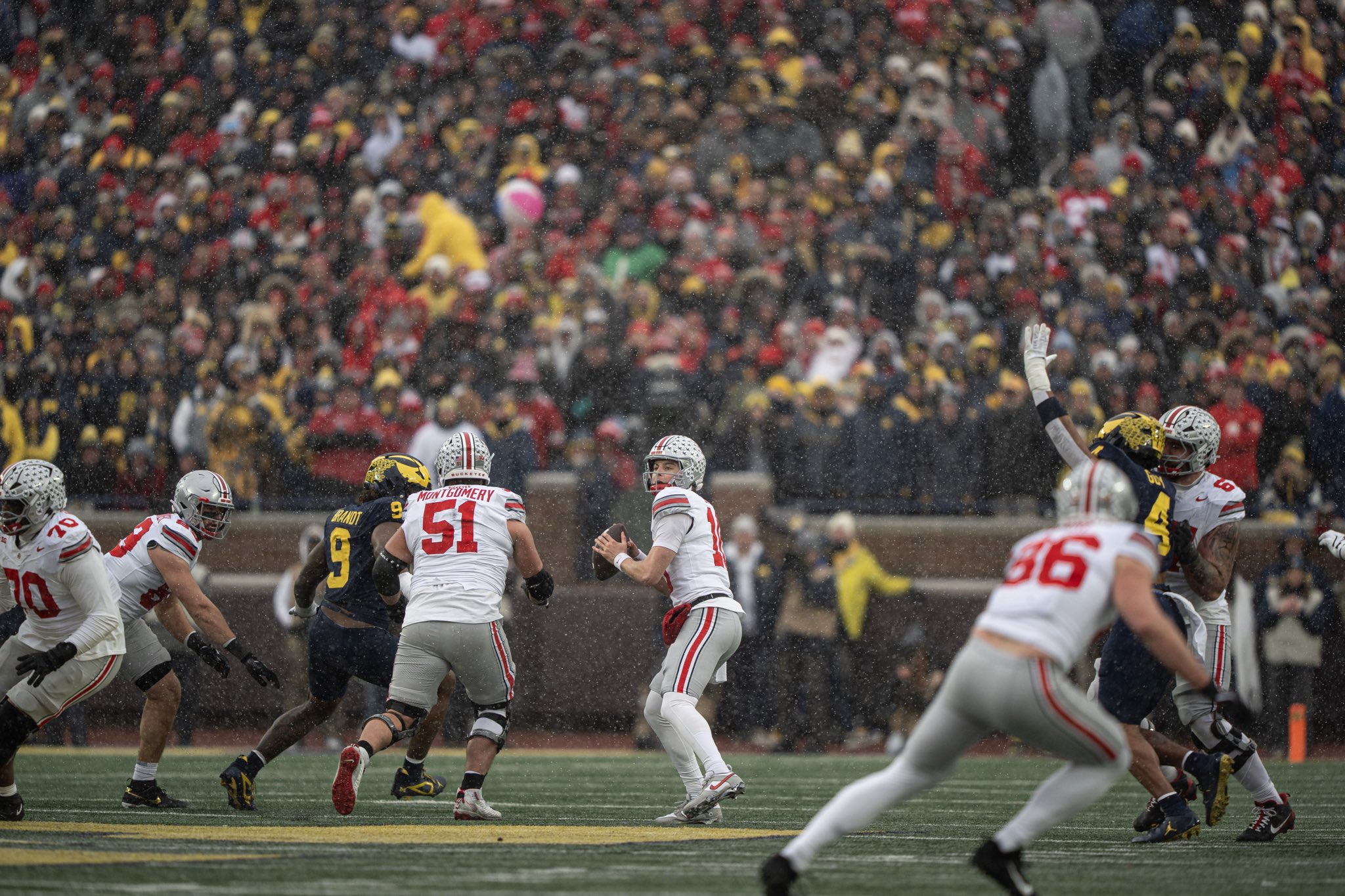
This is where the conversation around Ryan Day’s approach becomes more nuanced. Ohio State isn’t ignoring the portal — far from it — but the program still prioritizes signing and developing elite quarterback talent like Julian Sayin and Tavien St. Clair. Sayin’s first year as a starter in 2025 showed both the upside and the growing pains of that model. He was statistically brilliant and a Heisman finalist, yet in the biggest moments, his youth and inexperience were visible. That doesn’t mean the plan is flawed; it means the timeline matters. Sayin is now older, battle-tested, and closer to the age profile of recent championship quarterbacks, potentially flipping what was a disadvantage into a strength.

Ultimately, the portal era hasn’t eliminated the value of quarterback development — it’s just made patience harder and balance more important. Ohio State’s willingness to blend both approaches, pairing elite recruiting with strategic portal additions, may be the most sustainable model moving forward. Ryan Day is betting that developing quarterbacks still matters, even if the path is messier and the margin for error is smaller. For Buckeye fans, that bet still feels worth making, especially if the next evolution of this approach leads to a more experienced Julian Sayin hoisting a trophy in January of 2027.