 Eric Boggs
Ryan Day has built Ohio State into one of college football’s most stable and forward-thinking programs, and part of that success comes from how he develops not just players, but coaches. One of the common traits of strong leadership is the willingness to prepare the next generation, and right now it appears Day is doing exactly that inside the Woody Hayes Athletic Center. The interesting part is that the coach receiving that developmental push may not be the name most fans expected.
For years, the assumption has been that Brian Hartline was the natural heir apparent within the program. Others have speculated about the possibility of James Laurinaitis or even outside names with Ohio State ties such as Marcus Freeman. But the current focus isn’t necessarily about who will be the next head coach — it’s about who Ryan Day is intentionally developing to grow into a bigger offensive role. Based on recent staff moves and public comments, Keenan Bailey has quietly become one of the most important figures in that process.
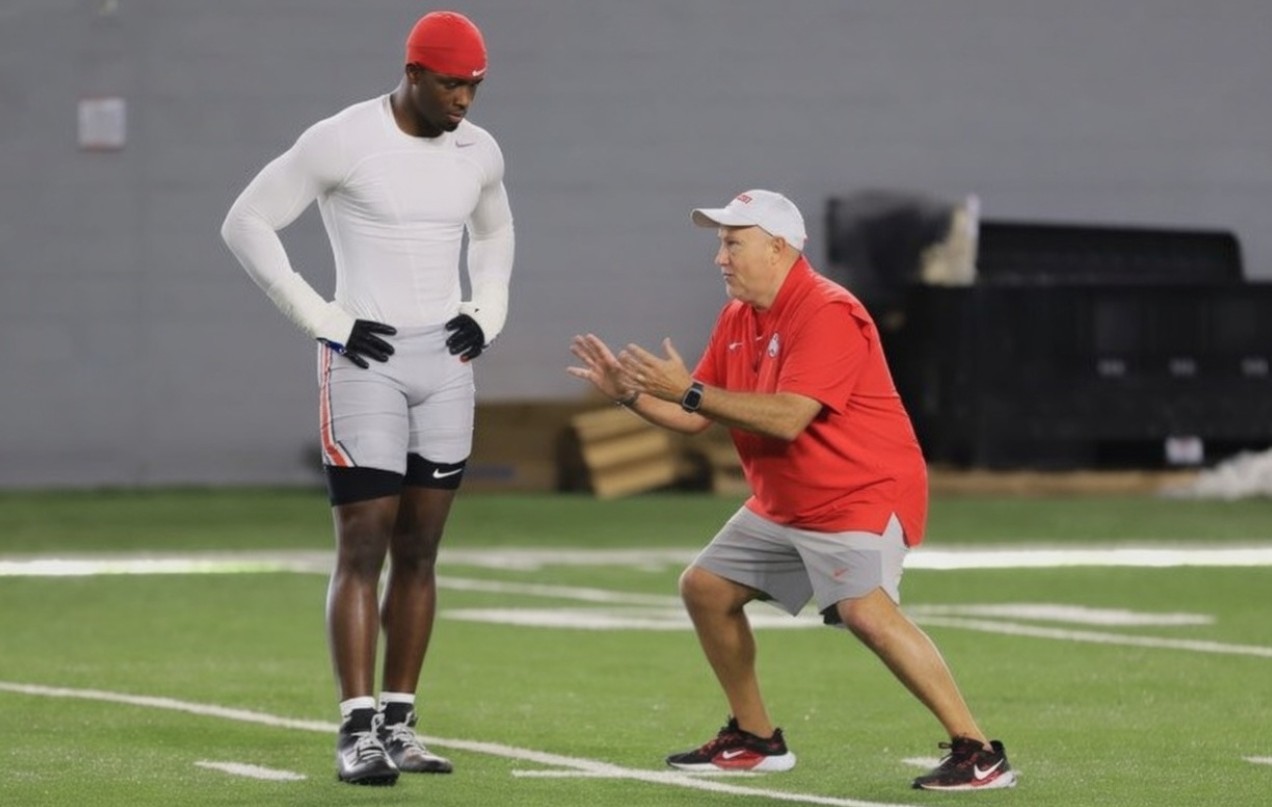
Day has not been shy about praising Bailey, calling him one of the hardest workers in the building and one of the most underrated members of the staff. That type of praise from a head coach isn’t handed out lightly. It signals trust, and trust is often the first step toward expanded responsibility. Bailey’s reputation internally has been built on preparation, recruiting effort, and attention to detail — traits that make him a logical candidate for growth within the program.

Of course, Bailey’s work hasn’t been immune from criticism. Fans questioned Ohio State’s use of heavy personnel packages, particularly in the red zone, during stretches of last season. But the reality is more complicated than simply blaming a position coach for schematic frustrations. Offensive philosophy is driven at the top, and player execution, injuries, and overall strategy all factor into what fans see on Saturdays. When viewed in context, Bailey’s role appears to be part of a broader evolution in how Ohio State wants to operate offensively.
That evolution became more apparent with the offseason hire of assistant tight ends coach Thomas Morton. On the surface, it looked like a routine staff addition. But structurally, it frees Bailey from some of his day-to-day positional responsibilities and allows him to focus more on his role as co-offensive coordinator. The move suggests that Day is deliberately creating space for Bailey to grow beyond his current title.
The progression mirrors the path Brian Hartline once took. When Hartline was elevated into a co-offensive coordinator role while working alongside experienced play callers, the goal wasn’t immediate control — it was development. The same type of mentorship now appears to be unfolding for Bailey, who has the opportunity to learn under veteran offensive minds while refining his own play-calling instincts and strategic understanding.

The arrival of Arthur Smith further reinforces that developmental environment. Smith’s offensive philosophy emphasizes condensed formations, disguising plays, and using structure to manipulate defensive reactions over the course of a game. It’s a system built on patience and sequencing rather than pure explosiveness, reflecting broader trends in both college and NFL offenses. For Bailey, working inside that framework provides a hands-on masterclass in modern offensive design.
This shift in philosophy has frustrated some fans who were accustomed to Ohio State scoring in bunches and spreading the field. But the approach reflects the realities of current rule changes and defensive adjustments across the sport. By studying under Smith and working within Day’s evolving system, Bailey is learning how to construct an offense that wins games in multiple ways — whether through tempo, deception, or strategic play sequencing.
The long-term benefits for Bailey are obvious. He gains experience as a co-coordinator, develops an understanding of play-calling strategy, and expands his leadership profile within one of the nation’s premier programs. From there, several paths could emerge. He could step into a full-time offensive coordinator role elsewhere, eventually return with play-calling experience, or grow into an even larger role within Ohio State’s own staff. Regardless of the outcome, the preparation happening now is clearly intentional.

In many ways, Ohio State treats coaching development the same way it treats player development. Just as recruits are shown multi-year plans outlining their progression, coaches are given structured opportunities to advance their careers. Staff changes, new hires, and expanded responsibilities rarely happen by accident inside a program as organized as Ohio State’s. Instead, they reflect long-term planning designed to sustain success.
Viewed through that lens, this off-season’s moves suggest that Keenan Bailey has become a central figure in Ryan Day’s offensive vision — not just for the present, but potentially for the future. Whether he ultimately becomes Ohio State’s offensive coordinator or takes his talents elsewhere, the trajectory is clear: Day is investing in Bailey’s growth and positioning him for the next step in his career.
It’s possible that not every detail of this developmental plan will unfold exactly as expected. Coaching careers are fluid, and opportunities arise in unexpected ways. But when examining the staff structure, the new hires, and Day’s public support, the signs point toward a deliberate effort to mentor and elevate Bailey within the Buckeyes’ offensive hierarchy. And for a program built on continuity and preparation, that kind of forward-thinking approach could be just as important as any play called on game day.